



Key Points of Lithium Battery Export
Transforce Chemical Logistics
With the rapid development of the global new energy industry, China's lithium battery exports have ushered in explosive growth. Whether it is new energy vehicles, energy storage systems, or consumer electronic devices, lithium batteries have become an indispensable core component.
However, lithium batteries are dangerous goods, and the export process is far more complex than ordinary goods. Many export companies frequently encounter obstacles in booking, declaration, packing, transportation and other links, ranging from delays in shipping schedules to fines or even returns.
So, how can we make lithium battery exports smoother? Today we will break down the key points in detail.
Choosing the Right UN Number is the Most Important First Step
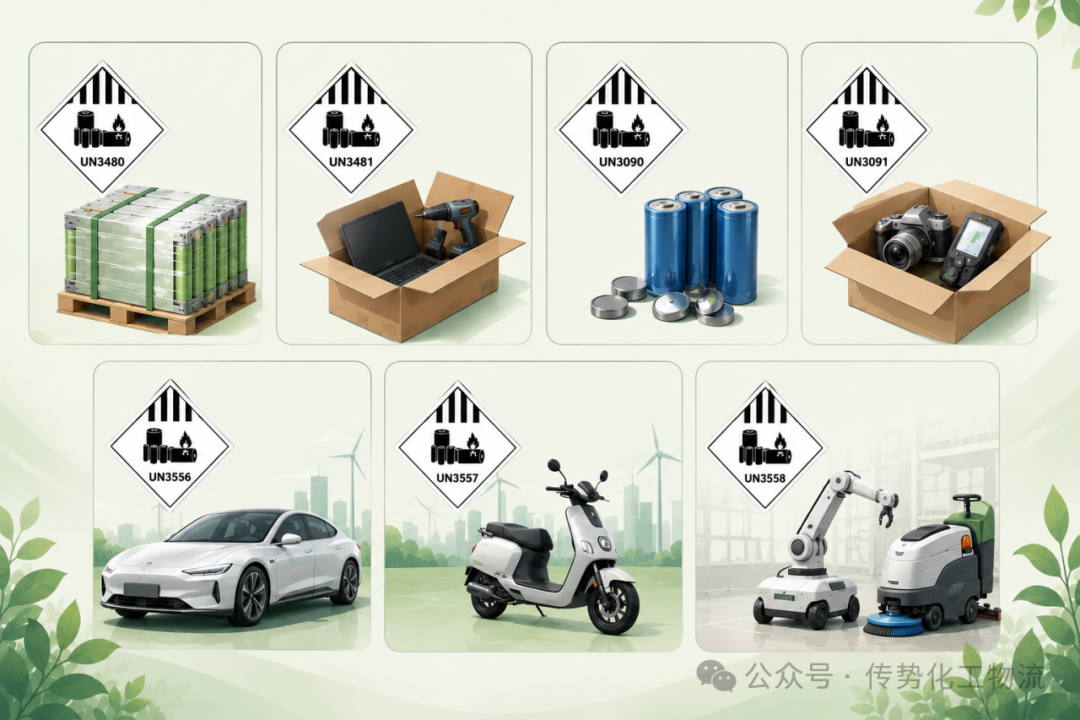
Common lithium battery UN numbers include:
UN3480: Lithium-ion battery (shipped separately)
UN3481: Lithium-ion batteries are included in or packaged with the device
UN3090: Lithium Metal Battery (Shipped Separately)
UN3091: Lithium metal batteries are included in or packaged with the device
UN3556: Lithium-ion battery-powered vehicles
UN3557: Lithium metal battery-powered vehicles
UN3558: Lithium battery-powered devices
Among them, UN3480 is the most common, but it is also the most susceptible to shipping companies and destination portsRefusal。 Because lithium batteries transported separately are risky, there are strict requirements for packaging, operation and emergency treatment.
UN3556 / UN3557 / UN3558 are suitable for electric vehicles, balance bikes, power tools, and other equipment. Although this type of cargo also contains lithium batteries, because it has been wrapped in equipment, the relatively low risk is higher, and some shipping companies are more acceptable.
Special Note:
Don't categorize arbitrarily based on experience. ✖
There have been enterprises that declared electric scooters as ordinary goods, but were identified as dangerous goods by customs inspection, resulting in the deduction of the entire batch of goods and fines of tens of thousands of yuan. It is important to accurately determine the UN number according to the Regulations on the Transport of Dangerous Goods based on the product structure and battery type.
Confirm the Acceptance Policy of the Shipping Company and the Destination Port in Advance

Not all shipping companies receive lithium battery cargo, and not all ports accept all types of lithium batteries.
Especially for UN3480, some shipping companies directly do not pick up the car, or only accept specific routes and specific voyages. In terms of destination ports, some countries or ports have additional restrictions on lithium battery imports, such as requiring the consignee to hold a dangerous goods import license, declare in advance, and unpack at designated warehouses.
Recommendations:
✅ When formulating a trade plan, it will simultaneously confirm whether the shipping company accepts the UN number lithium battery;
✅ Communicate with the agent or consignee at the destination port in advance to understand the special requirements of local customs and ports;
✅ Try to choose routes and service providers with experience in dangerous goods operation.
Otherwise, even if the goods are successfully boarded, they may not be able to clear customs or be forcibly returned at the destination port, resulting in huge losses.
The Export of Energy Storage Systems is Overweight, Oversized and Complex
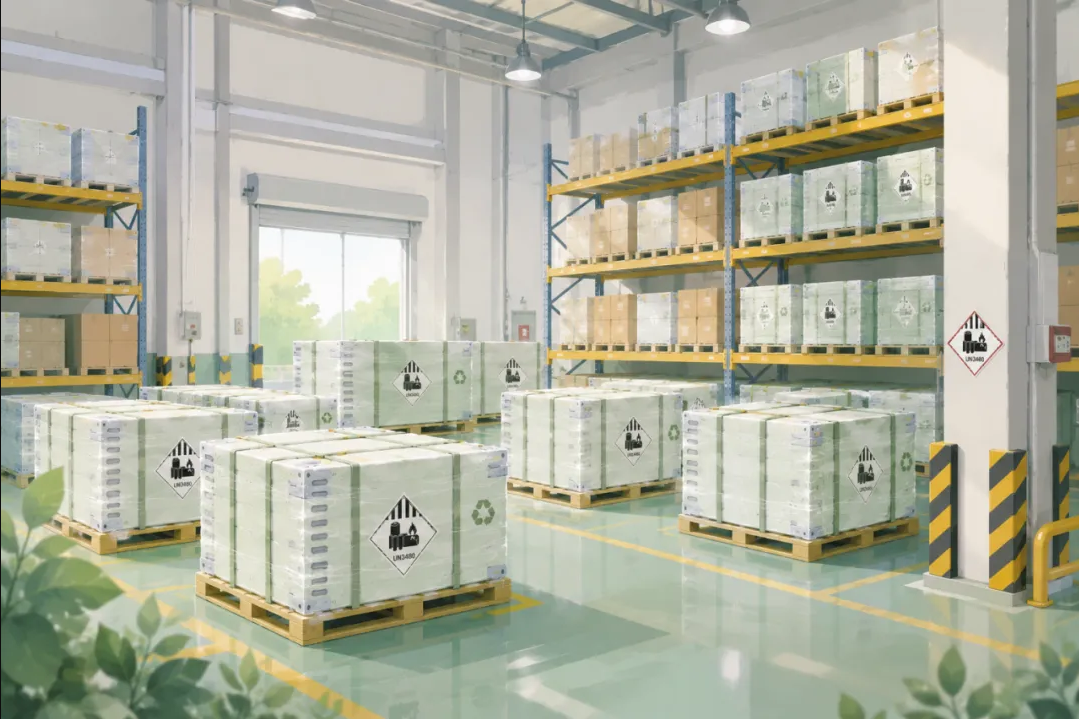
In recent years, energy storage systems (such as industrial and commercial energy storage cabinets, home energy storage batteries, etc.) have become the "new favorites" of exports. However, such products often have the following characteristics:
Large weight: more than 1 ton, or even tens of tons;
Large size: cabinet structure, ordinary warehouse cannot operate;
Difficult loading and unloading: Requires professional forklifts, lifting equipment and operators;
High storage requirements: Dangerous goods qualification warehouses are required, and temperature control, isolation and other conditions are met.
When choosing a logistics or warehousing partner, many companies only look at the price and ignore the actual operating capabilities of the other party. As a result, the goods arrived at the warehouse and found that they could not be unloaded, or the warehouse did not have dangerous goods qualifications and could not be stored, which eventually delayed the shipping schedule and incurred additional costs.
Recommendation: When choosing a logistics service provider, container warehouse or yard, be sure to verify on site or through video
! whether there is a qualification for dangerous goods operation
! Is there equipment to handle overweight/oversized cargo (e.g., heavy-duty forklifts, cranes)
! Whether there is a dedicated area for storing energy storage systems and emergency plans
Compliance Documents Cannot be Missing, and Cannot Be Wrong
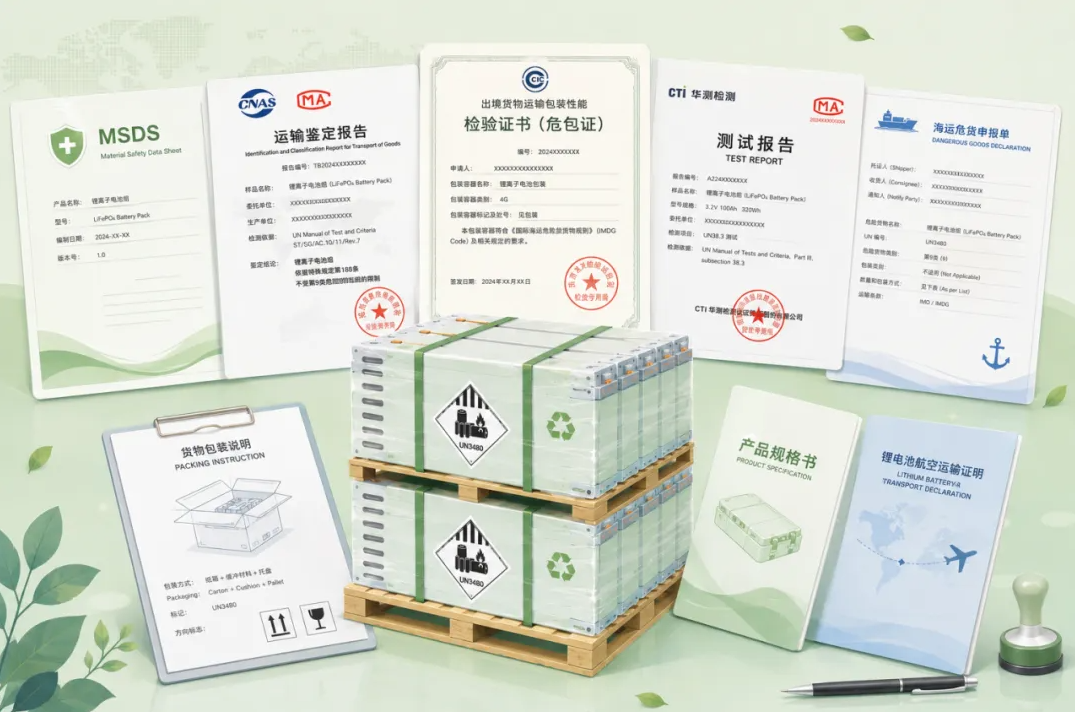
The document requirements for lithium battery export are very strict, and if a document or a data is filled in incorrectly, it may be refused to be released.
Core Required Documents Include:
1.38.3 Test Report
This is the "passport" for lithium battery transportation, proving that the battery has passed 8 rigorous tests (height simulation, temperature cycling, vibration, shock, etc.).
Note: The report must be issued by a qualified third-party organization and is within the validity period.
2. Dangerous goods packaging certificate
Certifying that the packaging container meets the requirements for the transportation of dangerous goods usually includes a performance inspection form and a use appraisal form.
3. Transportation appraisal report
It is the core basis for determining whether goods are dangerous goods, dangerous categories and corresponding transportation requirements under a specific mode of transportation, and is used to book space with shipping companies and declare to customs.
4.MSDS
Although it is not mandatory in all cases, shipping companies, customs, and destination ports often check and recommend providing it with the cargo.
Common Mistakes:
✖ 38.3 The report does not match the battery model;
✖ The packaging grade on the packaging certificate is inconsistent with the actual situation;
✖ The net weight and gross weight on the declaration form are filled in incorrectly;
✖ Forget to attach special markings and labels for lithium batteries (e.g. "UN3480", "Class 9" warning signs).
These "small mistakes" will not only lead to the detention of goods, but may also face administrative penalties from customs.

Lithium battery export is a job where "details determine success or failure".
From the accurate identification of UN numbers, to the policy confirmation of shipping companies and destination ports, to the operational capabilities of special cargo, and the completeness and accuracy of compliance documents, every link should not be taken lightly!
As long as accurate classification, professional operation, and compliance documents are achieved, the road of lithium batteries to the sea can be smoother, safer and more efficient.


