



In the face of increasingly frequent global trade, trade terms are the core basis for defining the responsibilities, costs and risks of buyers and sellers, which directly affects the smooth progress and cost accounting of transactions.
DDP (Delivered Duty Paid) and DAP (Delivered at Destination) are commonly used terms in Incoterms rules, which often confuse foreign trade practitioners due to the blurred boundaries of responsibility and complex cost composition.
Whether it is a cross-border e-commerce seller planning a logistics plan or a traditional foreign trade enterprise signing a trade contract, a clear understanding of these three is crucial: if the terminology is not chosen correctly, it may lead to additional costs, delayed risk transfer, and even trade disputes.
We will systematically sort out the core differences between DDP and DAP from the core dimensions such as the scope of responsibility, cost assumption, and risk transfer nodes, so as to help practitioners accurately select and avoid potential risks in actual trade scenarios.
DDP delivery at the destination port
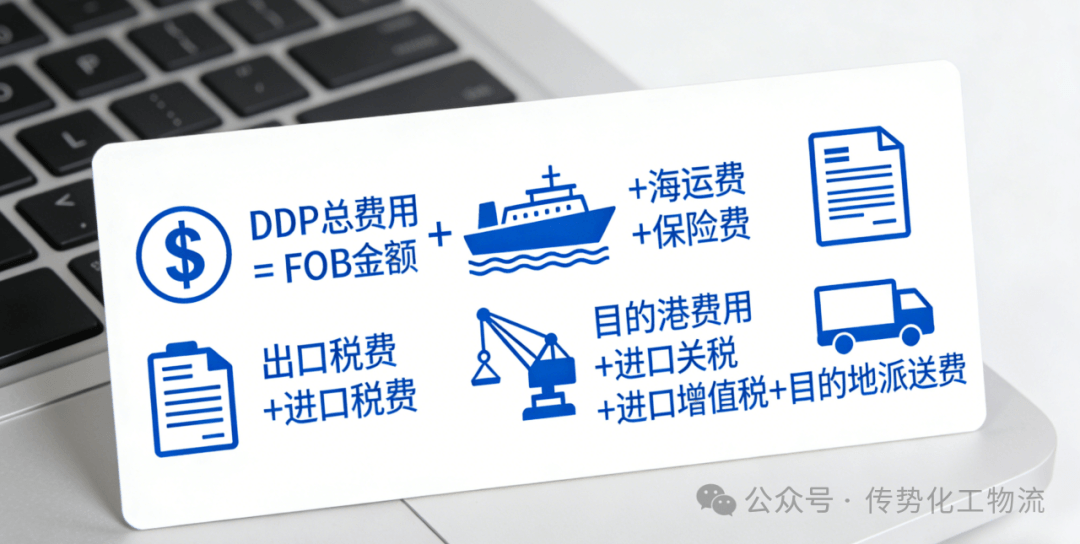
DAP destination delivery
The core difference between DDP and DAP
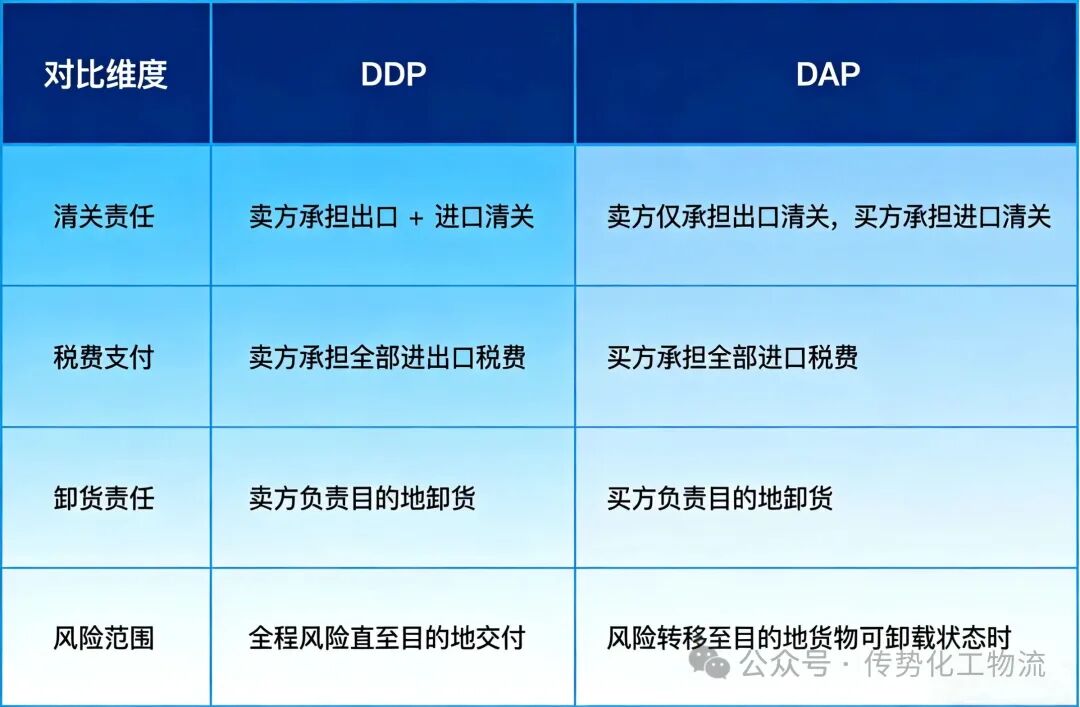
Key term associations and calculations
Note: The pictures in the article come from the Internet


